Introduction
Walk into any industry—automotive, construction, healthcare, or packaging—and you’ll find one common material quietly doing essential work: foam. But foam in its raw form is rarely useful on its own. It must be shaped, engineered, and refined. That’s where Foam conversion comes in.
A professional Foam converter transforms basic foam materials into highly functional components designed to meet exact specifications. This process is not just about cutting foam—it’s about solving real-world challenges with precision, creativity, and technical expertise.
Understanding Foam Conversion in Practical Terms
Foam conversion refers to the transformation of foam into usable products through a series of controlled processes. These processes adapt foam into forms that meet specific requirements such as insulation, protection, or sound management.
A skilled Foam converter works closely with clients to understand the problem first—whether it’s reducing noise in machinery or protecting fragile goods—then designs a foam-based solution that fits perfectly.
This ability to convert a flexible material into a precise tool is what makes foam conversion so valuable.
The Machinery Behind Foam Conversion
Behind every high-quality foam product is a set of advanced tools and equipment. A modern Foam converter relies on a combination of machinery to achieve different outcomes.
Precision Cutting Equipment
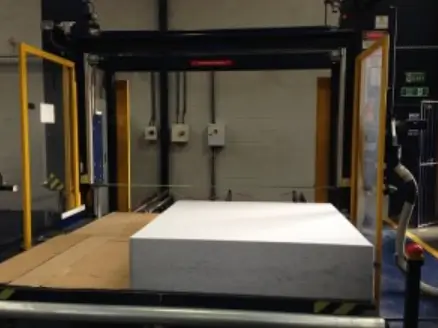
Machines like band saws and CNC profiling systems allow foam to be cut into exact dimensions. CNC technology, in particular, enables complex shapes that would be impossible manually.
Slitting and Thickness Control
Slitters are used to reduce foam sheets into precise thicknesses. This is especially important in industries where exact measurements impact performance.
Water Jet Technology
Water jets provide highly accurate cuts without damaging the foam structure, making them ideal for delicate or detailed designs.
Laminating Systems
Laminators bond layers of foam together or combine foam with other materials to enhance strength, insulation, or durability.
Die Cutting Presses
These are used for mass production of identical shapes, ensuring consistency across large orders.
Through these tools, Foam conversion becomes a highly controlled and repeatable process.
Foam Materials: Choosing the Right Base
Not all foam behaves the same way. A knowledgeable Foam converter selects materials based on how the final product will be used.
Polyurethane Foam
Soft, flexible, and highly absorbent, this foam is commonly used in seating, bedding, and acoustic applications.
Polystyrene Foam
Lightweight and rigid, it is widely used in packaging and thermal insulation.
Polyethylene Foam
Known for its durability and resistance to moisture, this foam is ideal for protective packaging and industrial applications.
Selecting the right material is the first step in successful Foam conversion, as it determines the product’s performance and lifespan.
Where Foam Conversion Makes the Biggest Impact
The versatility of Foam conversion allows it to serve a wide range of industries. A skilled Foam converter can adapt solutions for both simple and highly technical needs.
Packaging and Protection
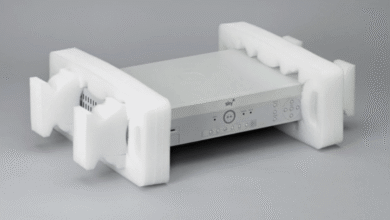
Custom foam inserts are designed to hold products securely during transport, reducing damage and improving presentation.
Automotive Engineering
Foam components are used to improve comfort, reduce vibration, and control noise inside vehicles.
Construction and Insulation
Foam is widely used for thermal insulation and sound absorption in buildings and heavy machinery.
Marine Applications
In boats and yachts, foam helps manage both temperature and noise in engine compartments.
Healthcare Solutions
Foam conversion enables the creation of medical supports, cushions, and protective equipment tailored to patient needs.
Acoustic Foam: A Specialized Conversion Use Case
One of the most technical applications of Foam conversion is acoustic treatment. Acoustic foam is engineered to control how sound behaves within a space.
Sound Absorption Principles
Acoustic foam reduces echo by absorbing sound waves rather than reflecting them. Its textured surfaces increase contact with sound, improving performance.
Common Environments
- Recording studios
- Offices and meeting rooms
- Home entertainment spaces
- Public venues like restaurants and gyms
Important Consideration
While acoustic foam improves sound clarity, it does not completely block sound transmission. For full soundproofing, it must be combined with other materials.
A professional Foam converter can design acoustic systems that balance performance and cost effectively.
Custom Engineering Through Foam Conversion
The true strength of Foam conversion lies in its ability to deliver tailored solutions. Off-the-shelf products often fail to meet unique requirements, but custom foam can be engineered to fit exact needs.
A Foam converter can:
- Design foam parts for irregular shapes
- Combine materials for multi-functional performance
- Adjust density and thickness for specific outcomes
- Solve complex industrial challenges
This level of customization makes foam conversion a preferred choice for businesses seeking efficiency and reliability.
Quality and Consistency in Production
Precision is critical in Foam conversion. Even small variations can affect performance, especially in technical applications.
To maintain quality, manufacturers focus on:
- Accurate cutting and shaping processes
- Consistent material selection
- Testing for durability and functionality
- Adherence to recognized standards
An experienced Foam converter ensures that every product meets both customer expectations and industry requirements.
Sustainable Approaches in Foam Conversion
As industries move toward greener practices, Foam conversion is evolving as well. Many manufacturers are adopting environmentally responsible methods such as:
- Using recycled foam materials
- Reducing waste through optimized cutting techniques
- Developing eco-friendly foam alternatives
Sustainability is no longer optional—it’s becoming a key factor in material selection and production processes.
Benefits of Foam Conversion for Businesses
Adaptability
Foam can be shaped and engineered for nearly any application.
Efficiency
Lightweight materials reduce transportation and handling costs.
Protection
Foam provides excellent cushioning and impact resistance.
Comfort
Widely used in seating and bedding for ergonomic support.
Acoustic and Thermal Performance
Helps control noise and temperature in various environments.
Cost Advantage
Offers high performance without the high cost of alternative materials.
See also: Market Research Services for Informed Business Decisions
Looking Ahead: The Evolution of Foam Conversion
The future of Foam conversion is driven by innovation. As technology advances, we can expect:
- Greater precision through automated systems
- Smarter materials with enhanced properties
- Increased use of sustainable resources
- Integration with digital design and manufacturing tools
The role of the Foam converter will continue to expand, focusing not just on production but also on innovation and problem-solving.
Conclusion
Foam conversion is a powerful process that transforms simple materials into highly functional solutions. From protecting products during shipping to improving sound quality in a room, its applications are vast and growing.
A skilled Foam converter combines technical expertise with advanced machinery to deliver customized, high-quality results. As industries demand more efficient, sustainable, and precise solutions, foam conversion will remain a key part of modern manufacturing.
In a world that values performance and adaptability, foam conversion proves that even the simplest materials can achieve extraordinary results.